2025 SPECIAL MOM STORIES
Akila Vaidyanathan
Akila remembers a time when life with her son Nishanth, felt no different from any other young family’s journey. For the first two and a half years, everything seemed perfectly normal. Then slowly, Nishanth started losing his speech, and with it came the uncertainty every parent fears but cannot name. There was no immediate diagnosis, only questions and the exhausting search for answers. When Nishanth was finally diagnosed with autism after returning to India, Akila’s world changed forever.
Today, Nishanth is 30 years old. He loves food, cycling, travelling, nature, and helping his mother in the kitchen. In many ways, he reminds the world that joy does not come from fitting into society’s narrow definition of “normal.” It comes from being accepted for who you are. “For me, raising Nishanth became a journey of self-discovery — one that tested my patience, reshaped my priorities, and taught me to live in the present. If I spend all my time worrying about his future, I lose the time I could spend with him today,” Akila says.
Her message is simple and powerful: “Children like Nishanth do not need to be ‘fixed’ to belong. Society must stop trying to make them normal and instead create spaces where they are accepted as they are. Inclusion begins the moment families stop apologising for their children and start living life on their own terms.”
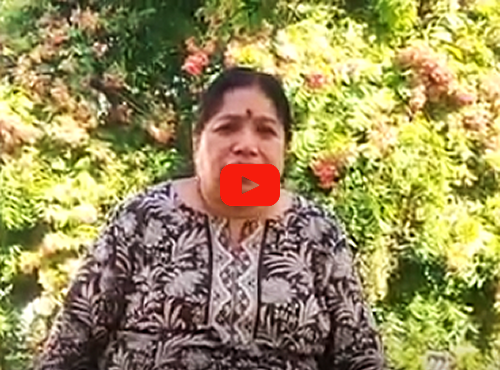
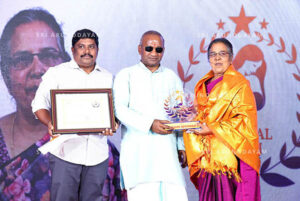
Catherine Rathnabai S
When Catherine’s son Paul Prasanth was born in 1989, he was a healthy, beautiful baby. Like every mother, she dreamed of a future filled with milestones and possibilities. But when he was just over a year old, a fever changed everything. Doctors later diagnosed him with brain fever and warned her that he would face developmental challenges. Catherine still remembers that moment as the day her world went dark. The medical terms meant nothing to her at first, but the weight of what they implied shattered her completely. The grief was so overwhelming that she herself fell seriously ill and required treatment.
Slowly, through pain and confusion, Catherine began educating herself. She came to understand that her son’s condition was not a disease to be cured, but a reality to be accepted, and motherhood transformed her suffering into purpose.
Paul Prasanth lived for 28 years before passing away, and though nine years have gone by since his loss, Catherine continues to speak her message to other mothers. “These children are not burdens, but lives entrusted to us with meaning and purpose,” she says.
“Families cannot walk this journey alone,” Catherine says. “Society, organisations, companies, and governments must come together to build a kinder and more supportive world for children with disabilities and for the parents who stand beside them every day.”
For Catherine, receiving the Special Mom Award is not a personal achievement. She accepts it on behalf of countless mothers who have quietly endured heartbreak, fought fear, and continued loving with extraordinary courage even when life gave them reasons to give up.
Gayathri R
Gayathri’s son, Anirudh Hariharan, was diagnosed with autism at the age of two after facing several severe medical challenges. While the diagnosis brought fear and uncertainty, Gayathri chose acceptance over despair and committed herself to helping her son live with dignity.
Determined that Anirudh should grow through social learning, she enrolled him in an inclusive school environment where his sister, Soujanya, became one of his greatest supporters—playing with him, understanding him, and helping him communicate. Through her own experiences, Gayathri realised that while children naturally accept differences, adults often struggle with fear and prejudice.
“Rather than withdrawing from society, I decided to step forward to create change,” Gayathri says. She volunteered at V-Excel’s remediation unit and pursued postgraduate studies in psychotherapy to better understand human emotions and behaviour. Today, through Samarthya, a community-based rehabilitation initiative she helped establish, she provides counselling, psychological services, and social awareness programmes in rural communities, while advocating for dignity, self-love, inclusive education, and long-term care systems for children with disabilities.
“True change happens when families come together as a community rather than facing their challenges alone,” Gayathri says. Her story is a powerful reminder that acceptance and inclusion must become society’s collective responsibility.
Geetha Varadharajan
Geetha’s journey with her son Jaideep has been shaped by a determination to help him lead an independent life. Born prematurely at seven months, Jaideep faced severe medical complications from infancy, including repeated seizures that left his parents searching desperately for answers and support.
Over the years, the family learned that while there was no medicine to cure his condition, consistent therapy and patient care could help him grow and thrive. Today, Jaideep studies at NIEPMD Special School and continues his education in a government school, while also receiving the therapy he needs.
“I believe that children with disabilities should not be hidden away from society,” Varadharajan (Geetha’s husband) says. “I take Jaideep with me everywhere I go, encouraging him to engage with the world.” The couple’s message to other parents is simple yet powerful: “Don’t treat your children as different. Treat them as normal and help them become independent.”
The family deeply values the support they have received—from teachers, relatives, government initiatives, and even a compassionate landlord who welcomed them after meeting Jaideep. Above all, their story reflects the strength of a family that has remained united through every challenge while holding firmly to the belief that their child deserves a future filled with hope and opportunity.
Jayanthi T
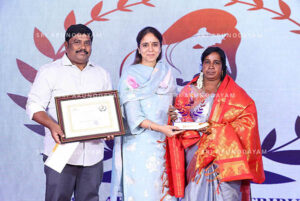
Jayanthi was only 19 when life placed enormous responsibility in her hands. She gave birth to twin boys, born just five minutes apart. But from the very beginning, one of them, Jose Raj, needed extra care. When he was rushed into an incubator, Doctors offered little explanation, leaving the young mother confused and frightened. But to Jayanthi and her family, Jose Raj was never treated differently. He was loved by his father, mother, brother, and relatives — not as a burden, but as a precious gift from God.
Then tragedy struck. When Jose Raj was just one and a half years old, Jayanthi’s husband died in an accident. Suddenly widowed at a young age, she found herself trying to navigate grief, motherhood, and survival all at once. Through it all, one person stood firmly beside her — her mother. Even after Jayanthi moved into a separate house and began working, her mother remained her greatest source of strength, helping raise Jose Raj.
Years later, another heartbreaking loss arrived when her mother passed away during the COVID period. For Jayanthi, it felt as though the ground beneath her had disappeared. Yet even in the middle of sorrow, life gave her a moment she would treasure forever. “For years, Jose Raj had never called me ‘Amma.’ That silent ache stayed deep in my heart,” Jayanthi says. “Then one unexpected day, he finally said it. ‘Amma’ – a single word so simple to most people, but for me, it was life-changing. It gave me the strength to believe I could continue this journey no matter how difficult it became.”
This is the story of a mother who kept moving forward through loss, loneliness, and uncertainty, sustained by love and hope. For Jayanthi, receiving the Special Mom Award is meaningful not because of the recognition, but because it tells mothers like her that society finally sees their struggle.
Jeeva S
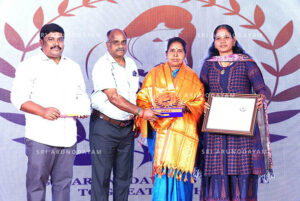
After years of longing for a child, Jeeva and her husband were overjoyed to adopt a son, Dilibabu. For the first few years, everything seemed normal, but by the age of five, his health and development began to change, leading the family into a difficult and uncertain journey.
Soon after, Jeeva lost her husband, leaving her to raise Dilibabu alone while also caring for her elderly mother. Despite pressure from relatives to place her son in institutional care, Jeeva stood firm. “I will not leave my son,” she says with conviction. Though she often feels isolated and unsupported, she continues to shoulder every responsibility with strength and determination. As a tailor, Jeeva works to provide for her family while ensuring her son receives the care and education he needs. She has also faced painful experiences of social rejection, including being asked to leave temples and public spaces because of her child’s disability. “But I refuse to hide him from the world,” she says.
Since joining school, Dilibabu has made remarkable progress. Though he speaks very little, he lovingly calls out “Amma” and “Grandma” and has begun showing care and affection towards his mother. Jeeva treasures these small moments deeply and takes immense pride in his growth.
Today, she expresses profound gratitude for the support of his teachers and the opportunities the school has provided. Jeeva’s journey reminds us that motherhood is not
simply about giving birth. She says, “Every single day, I must choose to love, protect, and stand by my adopted son, no matter how difficult the road may become.”
Kavitha D
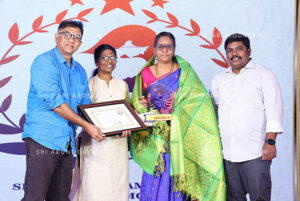
While living in Goa, Kavitha and her husband raised their two children, Janani and Keshav Kumar, both on the autism spectrum. Recognising the growing needs of their children, Kavitha’s husband sought a transfer from Goa so they could devote themselves more fully to the children’s development.
With little awareness of autism in the beginning, the family explored different therapies, special schools, and support systems to help their children thrive. Over time, their persistence began to bear fruit. Janani, who has mild autism and intellectual disability, completed both her 10th and 12th standard examinations—an achievement Kavitha holds close to her heart. Today, Janani helps manage the household, has learned cooking skills, and now works as a bakery assistant at Sankalp School. Their son, Keshav Kumar, is non-verbal and faced many challenges growing up. Through years of speech and occupational therapy, he has gradually developed his own abilities and now engages in photocopying and drawing work with confidence.
“Although awareness about autism has grown, society still needs to better understand people with autism and learn to treat them with respect,” says Kavitha. She also advocates for stronger government support systems, including specialised medical services and easier access to benefits for families of children with special needs. Kavitha’s story reflects the quiet strength of a mother who never gives up despite the difficulties they face as a family.
Mahalakshmi V
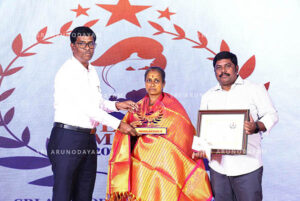
After her daughter Sri Bharathi was born, developmental delays became apparent, and Mahalakshmi’s family began years of therapy, special education, and medical consultations. Though doctors initially reassured them that a second child would be unaffected, their son Tamilselvan, too, was born with developmental and vision-related challenges, leading the family on to yet another difficult journey.
Despite emotional exhaustion and painful remarks from society, Mahalakshmi refused to give in to despair. She often faced these struggles alone, travelling to hospitals with only her young daughter beside her because no one else from the family came forward to help. Over time, however, her tears turned into determination.
“Today, both my children have achieved milestones that once seemed impossible,” Mahalakshmi says. Sri Bharathi completed her 10th standard, trained in caregiving, and learned skills such as sublimation printing and photo framing. Tamilselvan, who began walking only at the age of ten, completed both his 10th and 12th standards through NIOS with the support of a scribe and has now learned to communicate.
“I believe that every child possesses unique abilities and deserves encouragement. Discover your child’s strengths and support them in developing those abilities,” says Mahalakshmi. “I refused to accept defeat. Every time, I chose strength over shame and hope over
helplessness.” Most moving of all is the comfort she now carries in her heart—that one day, her daughter will care for her son, just as she has cared for them both all these years.
Manimegalai N U
Married at just eighteen, Manimegalai endured deep emotional trauma within her marital home. At her lowest moment, when she contemplated ending her life, she discovered she was five months pregnant. That unborn child became her reason to live.
Leaving behind her difficult circumstances, she returned to her mother’s home and chose to raise her son, Tharun Kumar, on her own. As the years passed and developmental delays became evident, Manimegalai realised her son had special needs. Living in a village with little awareness or support, she faced painful judgment and cruel comments from society. Instead of encouragement, people questioned her fate and urged her to abandon her child and “start a new life.”
But Manimegalai refused to give up on her son. While caring for him single-handedly, she completed her degree, earned both an M.A. and a B.Ed., and worked at a school to support their future. “One of my deepest pains is that fear and stigma robbed me of fully enjoying my child’s early years. As parents, we are often afraid of the world and what it would say,” she reflects. She is determined to experience the simple joy of walking hand in hand with her son before the very people who once laughed at them.
“The Special Mom Award ceremony means a lot to me because my son and I can be part of it without fear, judgment, or shame,” says Manimegalai. Her words are a powerful reminder that behind every parent fighting for the rights of a child with disabilities is a person seeking dignity and respect, not pity.
Meenakshi Kulkarni
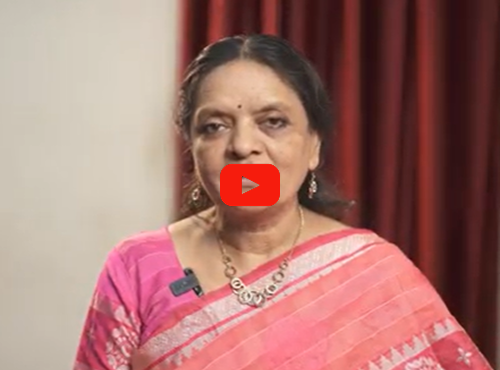
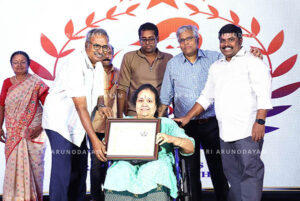
Meenakshi’s journey began with a mother’s instinct. Long before doctors acknowledged it, she sensed that something was not right with her infant son, Kedar. Despite repeatedly voicing her concerns, her observations were dismissed, and she was even told she was “overthinking” and “acting too smart”. Refusing to ignore what she knew in her heart, Meenakshi sought further medical help and eventually received the diagnosis: cerebral palsy.
Rather than surrendering to fear or despair, Meenakshi chose to educate herself. “I immersed myself in understanding my son’s condition and found guidance and hope at Vidyasagar in Chennai, where therapists and educators helped me navigate the path ahead,” she says. “What began as a search for help for my child became a turning point in my own life as well.”
Encouraged by the school’s director, Meenakshi pursued studies in special education and eventually joined Vidyasagar as a special educator, dedicating herself to supporting other children and families facing similar challenges. At the same time, she ensured that Kedar received both therapy and inclusive education. Her perseverance bore extraordinary fruit. Today, Kedar has completed both a B.Com and an M.Com degree and works at IIT Chennai—an achievement that stands as a testament to what early intervention, inclusion, parental determination, and the right support systems can make possible.
Through her journey, Meenakshi reminds parents not to let guilt consume them, but instead to focus on what can still be achieved, while learning to let go of regret and wishful thinking.
Meera Balaji
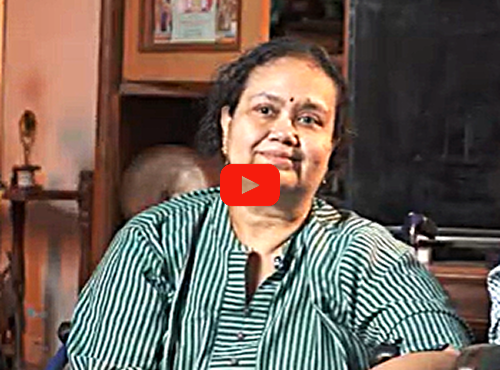
At the age of seven, Meera survived a severe polio attack that affected her body up to the neck. After years of treatment, she rebuilt her life through determination and hard work, refusing to let disability define her future.
Years later, as a mother, Meera faced a new journey when her son was diagnosed with dyslexia and attention deficit disorder after she noticed developmental concerns during his early school years. Determined to support him fully, she immersed herself in therapies and interventions while encouraging his talents and interests. Over time, her son flourished—not only academically, completing both his B.Com and postgraduate studies, but also creatively, excelling in swimming, drumming, and keyboard performances, winning several prizes along the way.
Even while supporting her son’s growth, Meera fought two major battles with cancer—uterine cancer in 2013 and breast cancer in 2018. Through every challenge, she continued to move forward with remarkable courage and grace. Her husband speaks of her with deep admiration, describing her as both “a gifted wife and a gifted mother who never allowed hardship to overpower hope.” Together, they built a family grounded in mutual respect.
“I believe that society must learn to understand and accommodate children with special needs rather than expecting them to adapt to the world around them constantly,” Meera says. “I also encourage mothers not to lose themselves entirely in caregiving. They must care for their own well-being and emotional health to be able to better care for their children.” Meera’s story is one of enduring immense adversity while continuing to bring hope to others, even through her own battles.
Rajeshwari Krishnamurthy
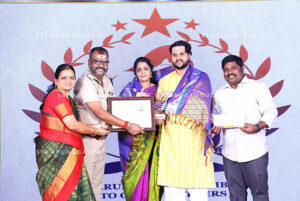
Rajeshwari’s son, Karthik—fondly known today as “Wow Karthik”—was diagnosed with autism spectrum disorder when he was two and a half years old. Along with communication difficulties, he experiences intense sensitivities to sound, colour, and taste, making everyday life deeply challenging.
Although Karthik learned vocational skills such as bakery work and jewellery making, his limited speech often became a barrier to employment and acceptance. Yet behind those challenges was a remarkable gift that would eventually transform his life—music.
“Music became Karthik’s language, his comfort, and his connection to the world,” Rajeshwari says. His talent moved some of India’s most celebrated musicians, including S. P. Balasubrahmanyam, Ilaiyaraaja, Yuvan Shankar Raja, and A. R. Rahman, who praised the beauty of his pitch and voice. Karthik went on to gain national recognition through Zee Tamil and Zee Hindi Sa Re Ga Ma Pa, where his audition performance crossed 53 million views and earned him an independent song with Zee Music Company.
Today, Karthik continues to train in both Hindustani and Carnatic music, while his family lovingly supports his dream of becoming a recognised musician. His grandmother says simply, “Only music can calm him down.”
Rajeshwari speaks openly about the stigma families still face and reminds society that “what persons with disabilities need is not sympathy, but empathy and acceptance.” Her family’s journey reflects the power of recognising ability beyond disability and standing firmly beside a child until the world learns to see their worth.
Renuga Devi K
For 28 years, Renuga Devi’s life revolved around one person — her daughter, Mahalakshmi. Just two days after Mahalakshmi was born, doctors told Renuga that her child’s brain development was severely affected. Soon after, another devastating prediction followed: they believed the little girl might not live beyond the age of ten. But motherhood does not measure life in medical predictions.
From the time Mahalakshmi was six months old, Renuga and her husband Kumar dedicated themselves completely to caring for her. Kumar, an auto driver by profession, became his daughter’s greatest protector. Mahalakshmi was deeply attached to her father, and he did everything within his limited means to keep her safe, comfortable, and loved.
Then tragedy struck again. When Mahalakshmi was around 13 years old, Kumar suffered a heart attack and passed away, leaving Renuga to continue the journey alone. Though relatives supported her with kindness, she chose not to depend entirely on them. Determined to stand on her own feet, she moved away with her daughter and continued caring for her independently. The years that followed were filled with hospital visits, seizures, uncertainty, and relentless effort.
What makes her story so moving is not only the pain she endured, but the depth of a mother’s love that never weakened despite repeated heartbreak. Eventually, after years of struggle, Mahalakshmi passed away. Renuga speaks of her daughter with both gratitude and grief — grateful for the years they shared, yet still carrying the ache of her absence every day. Today, her message to other parents is simple but profound: “Never neglect a child because they are different. Stand by them, fight for them, and love them with everything you have.”
For Renuga, this Award is bittersweet. It brings her happiness because it honours the journey she shared with Mahalakshmi, but it also reminds her of the daughter whose presence once filled her life and whom she still misses deeply.
Rupavathi R
Born with developmental challenges due to an underdeveloped brain, Bhavani – Rupavathi’s daughter has faced severe health complications throughout her life, including seizures, kidney failure, infections, and a heart condition that made certain treatments impossible.
Despite these immense difficulties, her parents never allowed shame or fear to confine her indoors. Rupavathi carried Bhavani to school until they saved up money for a walker, determined that her daughter should experience the world. At Bharathiyar School, Bhavani slowly began learning to draw, read, and write through therapy and special education support.
The family’s struggles extended far beyond medical care. Rupavathi learned to administer injections to her daughter at home to reduce treatment costs, while constantly worrying about Bhavani’s safety in the difficult slum environment in which they live. Yet through every hardship, both parents choose love over despair.
What makes their story especially moving is how Bhavani’s life transformed not only her own family, but many others around them. When the school offered Rupavathi work caring for other children with disabilities, she embraced them as her own. Today, she has helped enrol several children with similar needs into the school, encouraging other families not to hide their children away from society.
“Children with disabilities deserve to go out into the world with confidence. It is wrong to keep our children locked at home out of shame,” Rupavathi says. Her story reminds us that true motherhood is often stripped of comfort and certainty, demanding a daily choice to love and care for a child even while living with the painful awareness that their life may be heartbreakingly short.
Sandhya Krishnamoorthy
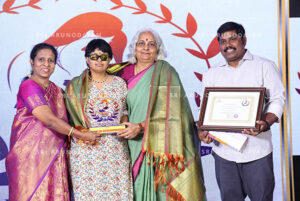
From infancy, doctors warned Sandhya that Aarthi’s brain development was delayed and that she would grow and learn differently from other children. As speech delays continued, regular schools refused to admit her, leaving Sandhya to search for other ways to help her daughter thrive.
Rather than allowing rejection to define Aarthi’s future, Sandhya focused on her daughter’s strengths. Sports soon became Aarthi’s world. Training alongside boys with discipline and determination, she developed confidence and an extraordinary athletic ability. Over the years, Aarthi represented India internationally in swimming, winning a bronze medal at the 2019 Special Olympics World Games and earning recognition in competitions abroad as well.
“Though she never attended formal school, Aarthi built a meaningful and vibrant life filled with achievement and connection,” Sadhya says. “She cycles, practices Silambam, enjoys dance and Zumba, helps with household chores, and is known for her warm and affectionate nature. People around her are naturally drawn to her joy and warm hugs.”
Inspired by her daughter’s journey, Sandhya pursued a B.Ed. in Special Education so she could better support Aarthi and help other children with disabilities as well. Today, even as Aarthi faces new challenges with declining vision and fine motor skills, her family continues to focus on possibilities rather than limitations.
Sandhya’s story reminds parents that society’s traditional paths do not always lead to success. When children with disabilities are encouraged to grow at their own pace and pursue what genuinely interests them, they can still lead fulfilling and deeply meaningful lives.
Sharmila J
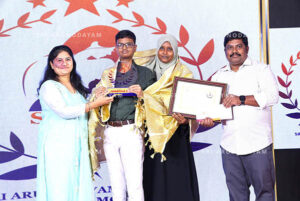
Though doctors initially reassured Sharmila that nothing was wrong, she sensed that her child was developing differently. Later assessments confirmed her suspicions, and she was told that many milestones would come slowly, if at all.
Instead of giving in to fear or denial, Sharmila chose action. “I immersed myself in helping my son grow, firmly believing that with patience and persistence, he can overcome far more than society expects,” Sharmilla says. Over the years, Saifullah blossomed into a remarkably talented young man. Today, he excels in drawing, chess, and solving the Rubik’s Cube, knows the names of 63 countries, and can recite 50 Thirukkurals. His artworks are even exhibited and sold.
At the same time, Sharmila openly speaks about the everyday struggles families continue to face—from inaccessible public spaces and transportation challenges to the social discomfort surrounding children with disabilities. “Rather than shielding my son from society, I intentionally created opportunities for him to interact with others and overcome his fear of crowds, even enrolling him in tuition classes simply so he could learn to sit among other children,” she says.
Sharmila believes that parents must actively participate in their child’s growth alongside therapists and teachers. Her message to other families is simple but powerful: “acknowledge the challenge, don’t deny it; keep searching for solutions, and never stop trying.” Her story reminds us that progress often begins with a parent’s willingness to accept the situation and move on, searching for possibilities that others cannot yet see.
Sritharani M
Sritharani still remembers the confusion and uncertainty of her son Adhikeshavan’s early years. At first, his behaviour seemed like ordinary childhood mischief — throwing stones, running madly, restless outbursts that exhausted everyone around him. Like many parents, she held on to the hope that he would “catch up” with time. But when speech still did not come by the age of three and a half, the family began searching for answers. The diagnosis of autism brought fear, questions, and an entirely new reality.
What followed was a journey familiar to many parents of children with special needs — hospital visits, therapies, crowded bus rides filled with crying and meltdowns, and the emotional exhaustion of trying to hold everything together. Yet behind every difficult day, Sritharani and her husband Sivakumar chose patience over despair. Then something remarkable happened.
At the age of seven, the boy who barely formed sentences discovered a gift that no diagnosis could define. Music became his language and bridge to the world. Today, Adhikeshavan has completed Grade 7 in Carnatic music, finished school, and is now pursuing the final year of his B.Com degree — milestones that once may have seemed impossible.
But Sritharani’s story is not just about her son’s achievements. It is also about the quiet wounds parents carry from society’s judgment. She remembers people asking cruel questions like, “Why bring children like this outside?” or “Why bring them to festivals?” Comments that humiliate, isolate, and make parents feel unwelcome in spaces meant for everyone. “The world may not always treat families with compassion, but parents must continue preparing their children to live confidently within it,” she says.
For Sritharani, the Special Mom Award is meaningful because it acknowledges the resilience hidden behind years of emotional pain. It is a reminder that while society often notices the struggle, it rarely recognises the extraordinary determination it takes to raise a child the world does not easily understand. “Children with autism are not limited by what they cannot do. Sometimes, they simply need someone who believes deeply enough to discover what they can,” she says.
Umamaheswari S
Umamaheswari’s journey as a mother began with fear and uncertainty. When her son Krishna was born in 1998, he suffered from severe jaundice and spent the first month of his life in the hospital. Soon after bringing him home, the family realized that he would need lifelong support and care.
From the age of three, Krishna began physiotherapy, and slowly, progress followed. But what truly transformed Umamaheswari’s life was not just her son’s improvement but a moment of awakening she experienced during a visit to a special school’s annual day in Chennai. Watching teachers and parents work tirelessly for children with disabilities moved her deeply. In that moment, she realised she did not want to remain a parent seeking help; she wanted to become someone who could help others too.
Today, because of the journey she took with Krishna, she supports nearly 40 special children through her work with the Trust. Her son, now 27 years old, continues to receive occupational and physiotherapy support. When she noticed his interest in computers, she encouraged and trained him in that area. Today, Krishna has developed the confidence and skills to help manage his father’s office — a reminder that ability often grows when someone takes the time to nurture it patiently.
“Don’t look at us with pity; support us. Include us, and most importantly, stop separating children as ‘special,’ as though they do not belong with everyone else,” says Uma. She also has a strong message for parents: “Every child has strengths waiting to be discovered. Instead of grieving over what society says they cannot do, we must focus on nurturing what our children can do.”
For Umamaheshwari, this award is not hers alone. It belongs equally to Krishna — the son who transformed her pain into purpose — and to the countless mothers who continue fighting silent battles every single day, often without recognition, but never without love.
Vanitha Pushpam O
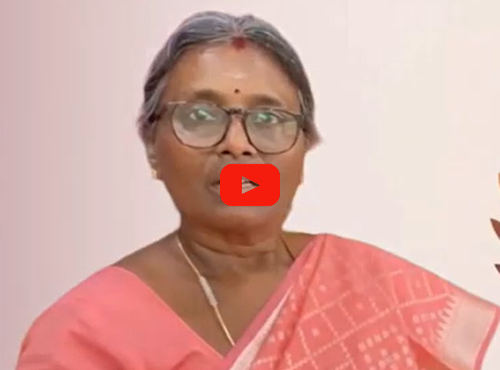
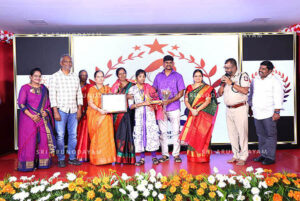
Vanitha Pushpam’s life changed when her daughter Nivetha was just one and a half years old. Born as a healthy child, Nivetha developed a fever that altered the course of her life forever. Despite countless medical evaluations, no one could clearly explain what caused her condition. Today, Nivetha lives with 90% disability.
Leaving her hometown near Madurai, Vanitha moved to Chennai, so Nivetha could receive proper treatment. Even while managing a government job with regular transfers, Vanitha fought to remain in Chennai to ensure her daughter continued receiving the support she needed. At no point did she consider leaving Nivetha in someone else’s care and walking away. Through extensive training at NIEPMD, Nivetha slowly began improving, and over the years, she received four major recognitions — including National and State Awards — achievements that many once believed impossible for a girl with severe disabilities.
“Children with disabilities deserve educational systems designed to include them, not isolate them,” she says. “I hope every school will create opportunities for children to learn through accessible methods like the NIOS curriculum, so no child is denied dignity through education.”
Vanitha speaks about motherhood with striking honesty. “I don’t see myself as extraordinary for caring for my daughter. It is simply a responsibility born out of love.” Yet her life reflects a strength many would struggle to carry. After getting Nivetha married, Vanitha continues to support both her daughter and son-in-law, determined to stand by them for the rest of her life.
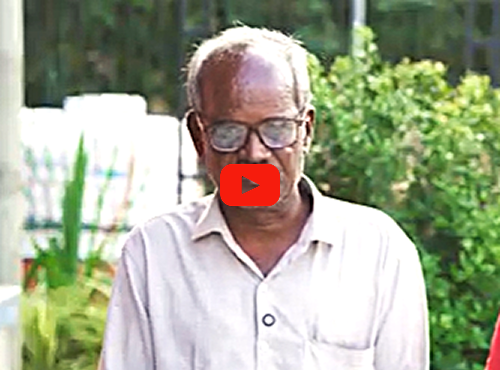
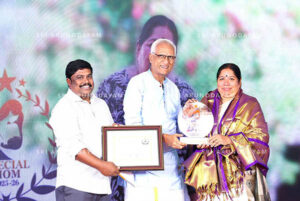
Velliyamoodu Govindaraj Devaraju
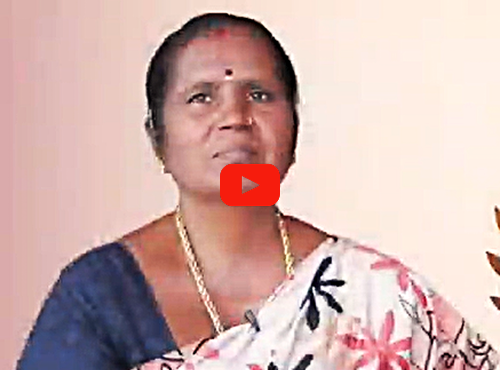
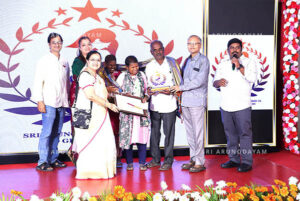
Devaraj married within his family, choosing to marry his niece. The couple was blessed with three children, a son and two daughters—both born with intellectual disabilities. As relatives and neighbours passed judgment and doctors offered little hope, the family faced their challenges silently.
While his wife was alive, she devoted herself entirely to caring for the children. But after her passing, Devaraj’s life changed completely. He stepped into every role—father, mother, caregiver, protector—learning to manage the home, support his daughters in their daily needs, and face society’s cruel stares and taunts with dignity and patience.
Despite hardship, Devaraj never allowed despair to define him. He encouraged his daughters to become independent, celebrated every small milestone, and found strength in his deep faith in God. Today, his daughters have learned tailoring at school, confidently helping with household responsibilities, waking early each day to sweep the yard and fetch water on their own.
What moves us most is not simply Devaraj’s sacrifice, but his tenderness. Though he worries constantly about who will care for his daughters after him, he says with conviction that he will never abandon them. In his own words, “It is because of my daughters that I received this award. They care for me four times more than I care for them.” Devaraj’s story reminds us that love is not always loud—it is often found in the quiet decision to stay, endure, and keep giving, day after day, no matter how difficult life becomes.